
'India has initiated a bear market and we will still go lower. It has nothing to do with the economy.'

Europe has overtaken Asia as India's biggest arms supplier, reflecting New Delhi's evolving defence procurement strategy.

India's economy in FY26 saw significant momentum from investment demand, with gross fixed capital formation (GFCF) accelerating to 8.2 per cent, while private final consumption expenditure (PFCE) also grew steadily, according to provisional estimates.

S&P Global Ratings projects India's economic growth to slow to 6.6 per cent in FY27, down from 7.7 per cent in FY26, citing energy stress and a potential sub-par monsoon.

Electronics manufacturing leader Foxconn has injected USD 37.2 million into its Indian subsidiary, Foxconn Hon Hai Technology India Mega Development Private Limited, increasing its stake to nearly 100 per cent. This investment reinforces Foxconn's commitment to iPhone manufacturing in India.

This is one of the coldest temperatures achieved in a research facility in India with more than 80 per cent domestically sourced components.
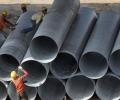
India has successfully negotiated the protection of its steel export interests under the free trade agreement with the UK, ensuring 85 per cent of its outbound shipments remain outside Britain's steel safeguard measures. This consensus addresses a key sticking point ahead of the comprehensive economic and trade agreement (CETA) coming into force on July 15.

Torrent Pharma has emerged as a top sectoral pick for brokerages, driven by healthy growth in India revenues and improved gross margins, leading to a 44 per cent stock return over the past year.
Electronics manufacturing leader Foxconn has injected USD 37.2 million into its Indian subsidiary, Foxconn Hon Hai Technology India Mega Development Private Limited, increasing its stake to nearly 100 per cent. This investment reinforces Foxconn's commitment to iPhone manufacturing in India.

The United States and India are on the verge of finalising a landmark bilateral trade deal, aiming to boost trade to USD 500 billion by 2030, according to US Deputy Assistant Secretary of State Bethany Poulos Morrison. The agreement seeks to open India's 1.4 billion-strong market to American goods on reciprocal terms, with ongoing high-level discussions to recalibrate the pact after recent changes in US tariff policy.
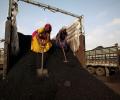
India's eight core infrastructure sectors experienced a significant slowdown in production growth, reaching a seven-month low of 0.5 per cent in May, primarily driven by negative growth in coal, crude oil, and refinery products.
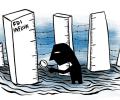
India's net foreign direct investment (FDI) surged more than fourfold to $6.58 billion in April 2026, driven by a significant increase in equity inflows and reduced repatriation by foreign investors, according to the Reserve Bank of India (RBI).

'We may be able to wind back some of the schedule reductions we'd taken in recent months.'

'The share of the private sector is at its all-time high of around Rs 42,000 crore in FY26, reflecting its expanding role in the defence ecosystem.'

The technology startup ecosystem in India attracted $7.2 billion in funding during the first half of calendar year 2026, marking a 12 per cent year-on-year (Y-o-Y) increase. However, even as funding increased, deal count fell sharply, according to a report by market intelligence platform Tracxn.

As the rupee weakens, wealthy families are accelerating investments in global assets.

India and the United States have reviewed progress on a proposed interim bilateral trade agreement, discussing market access, digital trade, and non-tariff barriers, as they race to finalise a deal before a temporary 10 per cent US tariff regime expires on July 24.

Pakistan's Defence Minister Khawaja Asif has issued a war threat against India, citing water security as a national concern. This comes as Pakistan grapples with a severe internal water crisis, attributed by experts to mismanagement, and India maintains its suspension of the Indus Waters Treaty following a terror attack. Asif accused India of "weaponising water" but admitted to lacking current data on the situation.

India now ranks among the world's top three destinations for both AI and STEM talent, holding roughly a 6 per cent share of globally mobile AI talent and a 7 per cent share of STEM talent.

Shares of Reliance Industries climbed nearly 3 per cent after its digital unit, Jio Platforms, filed draft papers for what could become India's largest-ever initial public offering, with the offering potentially raising around Rs 37,700 crore (USD 4 billion).
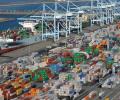
India's latest trade data reveals a significant geographical realignment, with trade surpluses growing decisively with Asian and African nations, even as surpluses with traditional partners like the US and Netherlands narrow.

India's unemployment rate reached an 11-month high of 5.5 per cent in May, up from 5.2 per cent in April, according to the National Statistics Office, indicating a softening labour market as labour-force participation also eased.

A new report reveals a significant shift in India's AI hiring landscape, moving from experimental roles to those focused on deployment, integration, and scaling of AI solutions. Employers, including GCCs, IT services, and enterprises, are increasingly seeking professionals who can implement AI across core business operations, leading to a demand for core AI roles that currently outstrips the available supply.

India has launched anti-dumping investigations into imports of thermal paper, Biaxially Oriented Polyamide (BOPA) Film, and certain antioxidants from China, following complaints from domestic manufacturers alleging material injury due to cheap imports.

Through his commitment to democratic norms, debate, dissent and constitutionalism, Jawaharlal Nehru helped ensure that parliamentary democracy took deep root in independent India. Utkarsh Mishra evaluates Nehru's 17 years as India's first prime minister, examining his role in nation-building, democratic institution-building, economic planning, scientific advancement and foreign policy.

A recently finalised peace deal between the US and Iran, set to be signed on June 19, is expected to significantly benefit India's economy by boosting exports to West Asia, stabilising the rupee, and easing inflationary pressures, according to exporters and experts.

India's remittance inflows have remained robust despite the West Asia conflict, driven by precautionary transfers and diversification of remittance sources, with bankers expecting continued stability for the year.

India Post is reinventing itself from a traditional mail service into a modern logistics, e-commerce, and real estate powerhouse. Several post offices situated inside major university campuses, called Gen Z post offices, have received a facelift, with cafe-like decor and wi-fi availability.

Shareholder payouts by India Inc, including dividends and buybacks, increased by 2.2 per cent year-on-year in FY26 to $5.06 trillion, but this growth lagged the 18.8 per cent rise in reported net profit for the third consecutive year, leading to the lowest dividend payout ratio in 12 years.

Prime Minister Narendra Modi announced that the India-UK Comprehensive Economic and Trade Agreement (CETA) will come into effect on July 15, 2026, anticipating a significant boost to bilateral trade and investment.

A new study predicts a 55 per cent surge in drone deployment across India's logistics and clean tech sectors over the next three years, driven by rapid digitalisation and the need for faster, more sustainable solutions. The Indian logistics market is projected to nearly double to USD 428.7 billion by 2033, highlighting a significant transformation in these key industries.

India's annual defence production has reached an all-time high of Rs 1.78 lakh crore in FY 2025-26, marking a significant 15.6 per cent growth over the previous fiscal year. This achievement reflects a 110 per cent increase since 2020-21 and highlights the country's expanding defence industrial base, driven by policy support and increased private sector participation.

India significantly increased its crude oil imports from Russia and the United Arab Emirates in June, securing supplies as the Strait of Hormuz began to reopen, with Russian barrels remaining attractive due to discounts and UAE supplies offsetting earlier uncertainties.

Industry bodies representing alcoholic beverage manufacturers have welcomed the India-UK Free Trade Agreement (FTA), which will see tariffs on UK whisky and gin reduced, boosting bilateral trade and supporting premiumisation. However, domestic manufacturers are calling for state governments to withdraw concessions currently enjoyed by imported liquor brands.

India's exports reached a six-month high, growing by 18 per cent to USD 45.2 billion in May, driven by electronic goods, petroleum products, engineering items, and pharmaceuticals. However, the trade deficit widened to USD 28.21 billion due to a 10 per cent rise in imports, particularly petroleum products and gold, amidst surging crude oil prices.

The start of the West Asia conflict has led to a sharp increase in crude-linked raw material prices, pushing up the price of helmets across the country.

The reopening of the Strait of Hormuz, following a ceasefire agreement between the US and Iran, is expected to significantly ease India's crude oil supply risks, lower freight costs, and reduce inflationary pressures, as global oil prices have already dropped.

The World Bank has increased India's economic growth projection for FY27 to 6.6 per cent, citing resilient domestic demand, while simultaneously cutting its global economic growth outlook due to the conflict in West Asia.

Amazon CEO Andy Jassy announced an additional USD 13 billion investment in India, bringing the company's total capital commitment to USD 48 billion by 2030. This significant investment will primarily focus on expanding AI and cloud infrastructure, supporting job creation, boosting e-commerce exports, and digitising small businesses, aligning with India's growing digital economy.
A SAP study reveals that Indian enterprises are rapidly moving from AI experimentation to value-driven implementation, positioning India as a global leader in enterprise AI adoption. Indian organisations plan significant investments in AI, with projected fivefold growth in Agentic AI returns and a high percentage of businesses having defined AI strategies and dedicated AI leaders.
